Why water affects coffee
A great espresso is 98.5% water — which makes water the most important, and least controlled, ingredient in the cup.
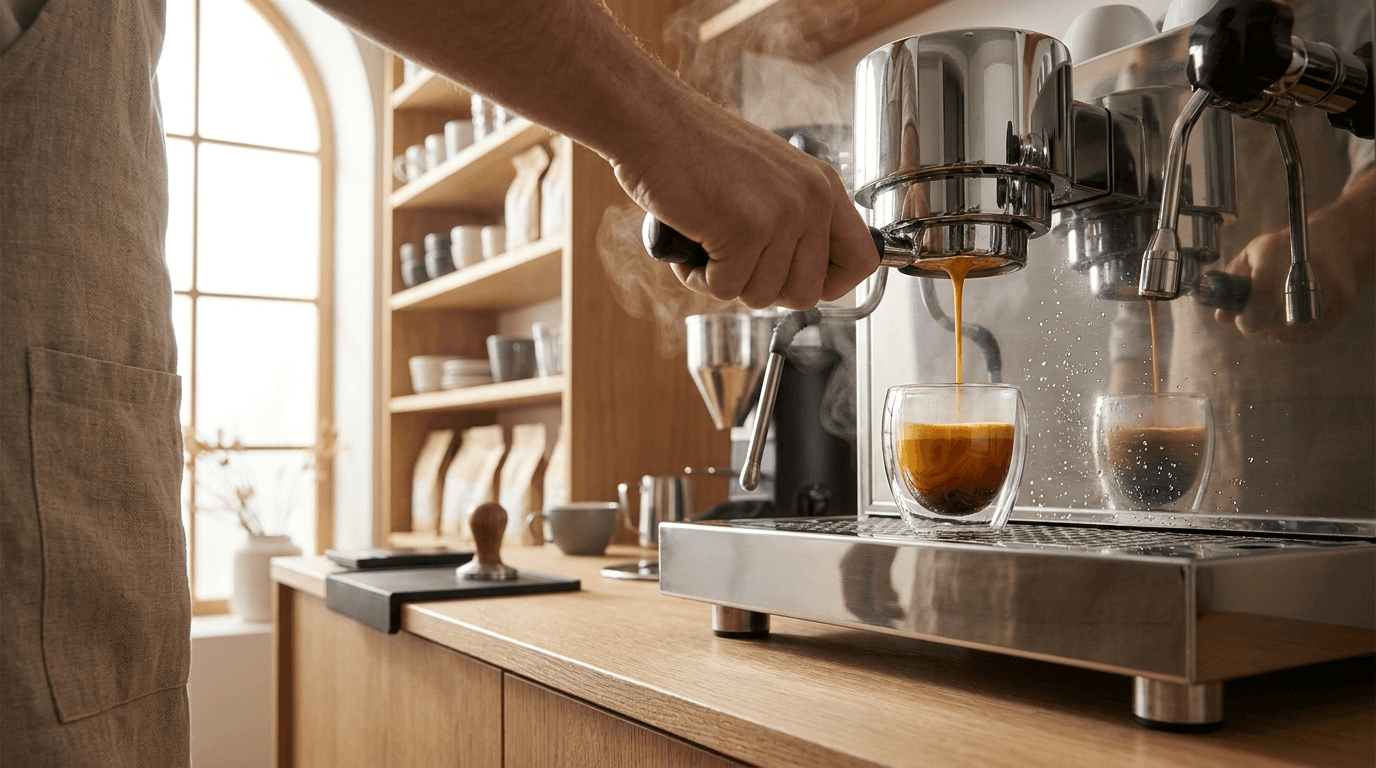
Ask a barista what makes a great espresso and you'll hear about beans, grind, pressure, and temperature. All true. But by volume, a cup of brewed coffee is roughly 98.5% water — and water chemistry quietly shapes everything that happens during extraction.
Extraction is chemistry
Coffee's flavour compounds dissolve into water at rates that depend on the water's mineral content and balance. Too little mineral content and the cup tastes flat and hollow; the wrong balance and it turns sharp, sour, or chalky. The same beans, pulled on two different waters, can taste like two different coffees.
This is why the specialty industry pays close attention to water hardness and alkalinity. Magnesium tends to lift sweetness and body; calcium and bicarbonate buffer acidity. Get the profile right and it's consistent, day after day.
The case for controlling your water
Most cafés control the grind to a tenth of a gram but accept whatever comes out of the tap — which changes with the season and the source. Bluewater's Café Station 1™ connects Liquid Rock® mineralization directly to the espresso machine, delivering a consistent, purpose-built water profile for extraction. It's the approach that earned Café Station 1™ the Specialty Coffee Association's Best New Product award at World of Coffee Dubai 2025.
Control the water, and you finally control the cup.
Frequently asked
- How much of coffee is water?
- By volume, brewed coffee is approximately 98.5% water, which is why water quality and mineral balance have an outsized effect on taste.
- Does filtered water make better coffee?
- Purified, mineral-balanced water gives more consistent extraction than untreated tap water, which varies by season and source.
This article is general information, not medical advice. Mao H2O keeps water-quality and health content evidence-based and non-diagnostic.
延伸阅读

Let's start the conversation.
Your space, your timeline. Three easy ways to take the next step — no commitment, no pressure, just an honest conversation about your water.